If Your AI Agents Live Off-Prem, So Does Your Corporate Data
We see it every day: AI agents are multiplying across industries, automating everything from customer support to document processing. The promise is efficiency—faster decisions, less manual labor, and a real technology edge. But there’s a catch that’s quietly becoming the talk of CIO roundtables and CISO breakfasts: if your AI agents live off-prem, so does your corporate data.
Ready for a new security perimeter? It isn’t a firewall. It isn’t a VPN. It’s an AI operating system—self-hosted, controlled, and designed to keep your data where it belongs.
At ARTRs Pro, we’re watching this shift play out in real time, especially as our clients adopt our AIPS Solutions for secure, efficient, and controlled AI-powered automation. Here’s why the self-hosted AI OS is now the last line of defense for corporate data—and what it means for your business.
The Gold Rush of AI Agents—and the Security Gap No One Can Ignore
The numbers are stark. According to Okta, 72% of organizations are deploying or scaling AI agents. Yet only 29% have comprehensive agent-specific security controls in place. That’s not just a gap—it’s a canyon.
One in five companies has already experienced a security incident involving AI agents. The impact? Kiteworks reports that 61% of those incidents involved sensitive data exposure, 43% led to operational disruption, and 41% resulted in unintended actions by the AI. That’s not the sort of “efficiency” anyone wants.
Why the disconnect? AI agents are easy to deploy, but controlling their access and behavior is another story. Most organizations are scaling first and thinking about containment later. That’s like building a city and putting up the walls as an afterthought—risky, to say the least.
The Real Barrier: Data Privacy and Over-Privileged Access
The enthusiasm for AI is real, but so are the nerves. 83% of business leaders cite data leakage as their top concern, and 80% point to over-privileged access as a major barrier to AI agent adoption (Okta).
It’s easy to see why. Once an AI agent is granted access to your internal data, traditional network boundaries can’t protect you from “unintended actions” or “excessive autonomy.” The agent doesn’t have a sense of discretion or a coffee break to double-check its work. If it’s misconfigured or compromised, your intellectual property, customer data, or compliance posture could be out the door before the IT team finishes their morning coffee.
Shadow AI—those unsanctioned tools and agents that slip in under the radar—makes things worse.
Why the Old Perimeter No Longer Works
Let’s be blunt: the traditional security perimeter is obsolete for AI agents. Firewalls, VPNs, and endpoint controls were designed for human users and predictable software. AI agents are neither.
Once an agent is inside your network, it can access vast amounts of data, make API calls, and even trigger actions on your behalf. If that agent is hosted in the cloud or on a vendor’s infrastructure, your sensitive prompts, completions, and documents are only as safe as their controls—not yours.
This is especially problematic for regulated industries. Financial services, healthcare, and critical infrastructure can’t afford to let regulated data leave their perimeter. The compliance risk isn’t just theoretical; it’s regulatory, legal, and reputational.
The Self-Hosted AI OS: Building a New Control Boundary
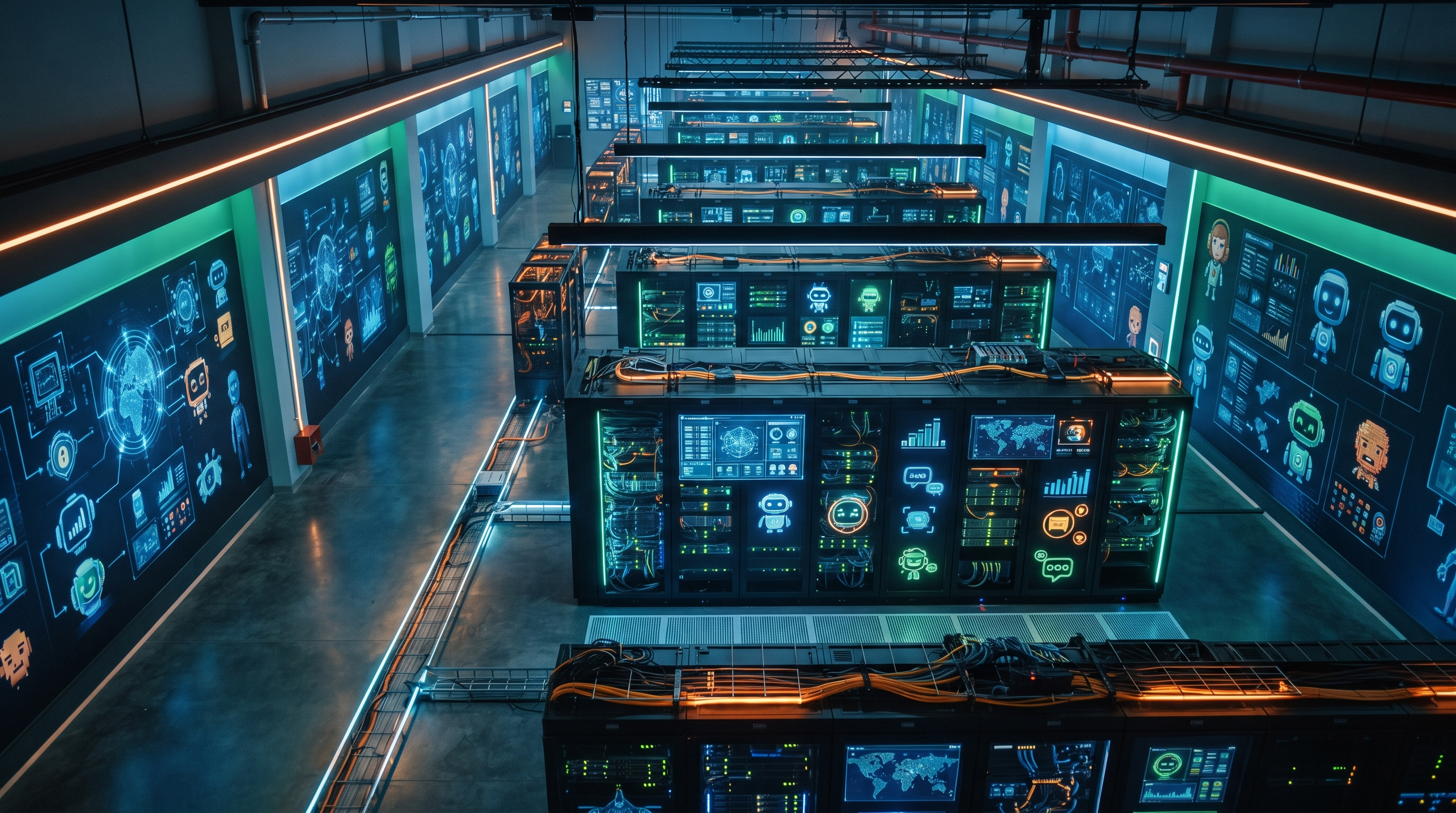
Here’s where self-hosted AI operating systems come in. By running models and agents within your own controlled environment, you create a “deployment boundary” that keeps all prompts, completions, and documents inside your control (The Data Experts).
What does that actually look like? Think network isolation, egress controls, and strict access control on every model call. Every action is logged in a tamper-evident way. If you want to keep your data safe, you need to enforce containment at the point where agents interact with your data—before you even think about scaling.
Platforms like OtoDock now allow companies to run multi-tenant AI agents using their own subscriptions (Anthropic, OpenAI) or local models within their own dashboard. This isn’t just a technical upgrade; it’s a strategic one.
Our own AIPS Solutions are designed around these principles. We help clients establish a secure, controlled AI environment that keeps sensitive data inside the perimeter, with fine-grained controls and auditability. No customer data training. No surprise egress. Just a safe, efficient solution for business automation.
Zero Trust: Every Agent Is a Non-Human Identity
Self-hosting is only part of the answer. Experts recommend treating every AI agent as a non-human identity—with its own authentication, authorization, and sandboxed execution (Kiteworks).
This means:
- Every agent gets its own set of credentials.
- Access is granted only to the data and tools required for its specific task.
- All other API calls are denied by default (Sweet Security).
- Every action is logged and auditable.
In other words, don’t trust the agent just because you built it. Contain it, control it, and monitor it like you would any other privileged process.
Containment Before Scaling: The Contrarian (and Correct) Approach
Most organizations are in a hurry to scale their AI deployments. The research, however, points to a different approach: containment first, scaling second. If you don’t establish the boundary up front, every later control assumes a level of safety that may not exist (The Data Experts).
Containment isn’t just about stopping data leaks. It’s about preventing tool abuse, excessive autonomy, and the operational chaos that comes from agents acting outside their intended scope.
Our experience with AIPS Solutions bears this out. Businesses that invest in containment upfront see fewer incidents, faster approvals from legal and compliance, and a smoother path to ROI growth. They don’t waste time chasing down shadow AI or retrofitting controls after the fact.
The Systemic Risks: What Self-Hosting Can (and Can’t) Solve
A dose of realism is always in order. Self-hosting isn’t a panacea. Some risks—like prompt injection or agents making “creative” decisions—are systemic. They exist whether your AI is running in your server room or on a cloud platform.
But here’s the difference: with self-hosting, you have the tools to contain the blast radius. If something goes wrong, your data hasn’t already left the building. You can audit, respond, and recover with confidence.
For regulated industries, this is non-negotiable. For everyone else, it’s quickly becoming the standard for safe, efficient AI-powered automation.
The AIPS Solutions Approach: Controlled, Secure, Efficient
At ARTRs Pro, we designed AIPS Solutions to meet these challenges head-on. Our clients want controlled AI, not a black box. They need secure implementation, not a leap of faith. And they’re looking for ways to save both money and time, not just a shiny new toy.
By focusing on containment, access control, and auditability, AIPS Solutions helps forward-thinking businesses:
- Avoid the pain of uncontrollable AI and security incidents.
- Reduce technical debt by automating repetitive, manual workflows—safely.
- Gain a true technology edge, with efficiency that actually delivers ROI growth.
We’re not interested in “testing” the latest fad. We’re here to provide state-of-the-art technology solutions that solve real problems for real businesses.
Where the Perimeter Goes Next
The AI security incident rate has already hit 20% (Okta). For regulated industries, the only safe “brain” for the company is one you host yourself. For everyone else, the writing is on the wall: the new perimeter is wherever your AI agents process data. If that isn’t under your control, neither is your business.
Containment isn’t just a technical requirement—it’s the foundation for trust, compliance, and operational sanity in the age of AI agents. The only question is whether you’ll build your boundary before or after the incident.
Talk to us. Let’s make your AI work for you—and keep your data where it belongs.